
Wildfire Power Outages: Backup Power Buyer’s Guide (2026)
Affiliate disclosure: This post contains affiliate links. As an Amazon Associate I earn from qualifying purchases. Product picks were chosen on the merits — no brand pays for placement.
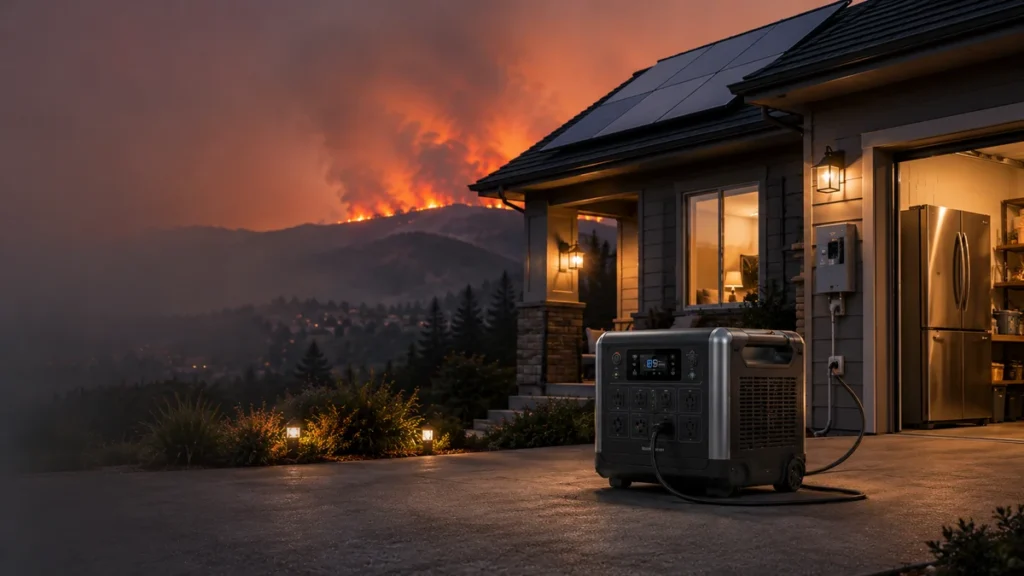
Wildfire power outages have a particular shape that changes how you prepare: they are often deliberate, announced in advance, and can last days. Public safety power shutoffs cut the grid to reduce fire risk during dangerous weather, and this guide covers how to keep essentials running through one — including the two hazards unique to wildfire season.
The short answer
Plan for a planned, multi-day shutoff. A battery power station is ideal because it runs indoors with windows shut against smoke and needs no fuel. But note two wildfire-specific issues: smoke cuts solar output, and a generator’s exhaust and heat are a poor fit near dry conditions. Charge fully before a shutoff.
One thing to know about this guide: I’ve never been through a wildfire shutoff, and none of these products are mine. I researched it because outages are a familiar part of my life, and a planned multi-day shutoff is the scenario I’d worry about most. The smoke-and-solar points come from published guidance; the product fit comes from specs and owner reports, not my own testing.
Public safety power shutoffs are different
Unlike a storm, many wildfire power outages are planned. Utilities announce a public safety power shutoff ahead of dangerous fire weather, giving you hours or a day of warning. That is a gift if you use it: charge everything to full before the grid goes down, because once it does, recharging is on you and may last days. Runtime planning is in the runtime guide.
What to power
The priorities mirror any outage: medical devices, the refrigerator, phones for emergency alerts and evacuation notices, and lights. In wildfire country, add air filtration — a portable air purifier to keep indoor air breathable when smoke makes outside air hazardous. A power station runs one easily and it is a genuine health need during a fire event.
Wildfire issue 1: Smoke cuts your solar
Here is the trap. A battery-plus-solar setup normally recharges itself during an outage — but heavy wildfire smoke can slash solar output dramatically, sometimes to a fraction of normal, exactly when you are relying on it. Do not assume solar will keep you topped up during a smoke event. Carry more battery capacity than you would for a storm, and treat solar as a bonus rather than the plan. The effect of obscured sun is covered in solar panel output.
Wildfire issue 2: Generators and fire risk
Safety: A fuel generator produces hot exhaust and requires outdoor operation, which is a poor combination near dry vegetation during fire weather — and it still carries the usual carbon monoxide risk if run too close to the home. A battery power station has no exhaust, no heat source and no fuel, making it far better suited to wildfire conditions. General guidance is at the Centers for Disease Control and Prevention.
This is the strongest case for battery over generator of any scenario — the very conditions that cause the outage make a generator riskier to run. See generator vs power station for the full comparison.
Preparing for the season
Keep your battery system charged throughout fire season, since shutoffs can come with little notice. Size for several days of essentials plus air filtration, and do not count on solar during heavy smoke. Have an evacuation-ready plan too: a portable power station you can take with you is more useful in a fire than a fixed system you must leave behind. See the home backup power guide, and follow evacuation guidance at Ready.gov.
Frequently asked questions
What is a public safety power shutoff?
It is a deliberate grid shutoff by a utility during dangerous fire weather, to reduce the risk of power lines sparking a wildfire. Unlike a storm outage it is usually announced in advance, giving you time to charge your backup fully before the power goes down.
Will solar recharge my battery during a wildfire outage?
Less than you would hope. Heavy smoke can cut solar output dramatically, exactly when you need it, so do not rely on it during a smoke event. Carry more battery capacity than for a storm and treat any solar recharge as a bonus rather than the plan.
Is a generator safe during fire season?
It carries added risk. Generators produce hot exhaust and run outdoors near potentially dry vegetation, plus the usual carbon monoxide hazard. A battery power station has no exhaust, heat or fuel, making it far better suited to wildfire conditions and usable indoors with windows shut against smoke.
Should I power an air purifier during a wildfire?
Yes, if smoke is heavy — keeping indoor air breathable is a genuine health need during a fire event, and a power station runs a portable purifier easily. Include it in your essentials when sizing backup for wildfire season.
Last updated: July 24, 2026. This is general preparedness information; follow official guidance from local authorities and Ready.gov during an actual wildfire or evacuation.